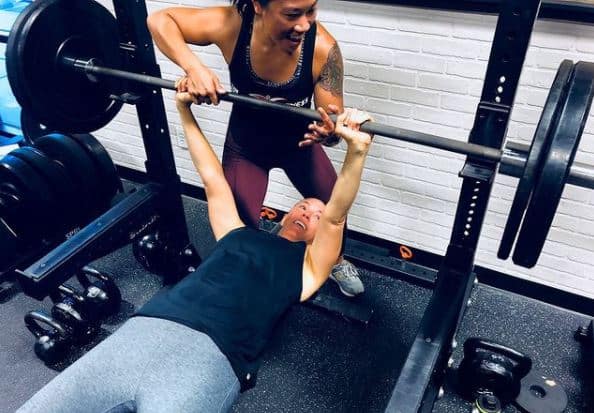
This question comes up in every consultation we do. Every single one. "Should I be doing HIIT or strength training?" And the internet has made it worse because depending on which article or influencer you stumble across, you'll get a completely different answer. The HIIT crowd swears cardio is king. The strength crowd says weights are the only thing that matters. Both sides have studies they love to cite.
We've been programming workouts for over 20 years and have trained more than 5,000 people. So here's what we've learned from actually watching bodies change, not from reading abstracts: the answer is both. But the way you combine them matters enormously, and most people get that part wrong.
Let's break this down properly.
What HIIT Actually Does to Your Body
HIIT stands for High-Intensity Interval Training. The basic idea is simple: you go hard for a short burst (usually 20 to 45 seconds), rest briefly, then go hard again. Repeat for 20 to 30 minutes. Think sprints, kickboxing rounds, burpees, or battle ropes.
Here's what happens when you train this way.
You burn a LOT of calories in a short time. A well-designed 30-minute HIIT session can burn as many calories as 60 minutes of steady jogging. For anyone with limited time (which is basically everyone), that's a huge deal.
Your metabolism stays elevated after the workout. This is the "afterburn effect" or EPOC (excess post-exercise oxygen consumption). After intense interval work, your body continues burning calories at a higher rate for hours. Some research puts this at 12 to 24 hours of elevated calorie burn. Steady-state cardio? Your metabolism drops back to normal almost immediately after you stop.
Your cardiovascular system gets stronger fast. HIIT improves your VO2 max (the amount of oxygen your body can use during exercise) faster than moderate-intensity cardio. Better cardiovascular fitness means you can train harder, recover faster, and do more work in less time.
The HIIT advantage in numbers: Research in the British Journal of Sports Medicine found that HIIT produced 28.5% more fat loss than moderate-intensity continuous training when total time was equalized. That's not a marginal difference.
What Strength Training Actually Does to Your Body
Strength training means using resistance (dumbbells, barbells, kettlebells, cables, your own bodyweight) to challenge your muscles. The goal is progressive overload: gradually increasing the demand on your muscles so they adapt by getting stronger and larger.
Here's what happens when you train this way.
You build lean muscle tissue, which is the long-term fat loss engine. Every pound of lean muscle you add burns roughly 6 to 10 extra calories per day at rest. That might sound small until you do the math over time. Add 10 pounds of muscle and you're burning 60 to 100 extra calories every single day without doing anything. Over a year, that's 22,000 to 36,000 extra calories burned. That's the equivalent of 6 to 10 pounds of fat, just from having more muscle on your frame.
Body recomposition happens. This is the thing that confuses people who are obsessed with the scale. You can weigh the same number but look completely different because muscle is denser than fat. It takes up less space. People who strength train consistently often drop multiple clothing sizes before the scale moves much at all.
Everything else in your life gets easier. Carrying groceries. Picking up kids. Getting off the floor. Moving furniture. Strength training builds the kind of functional fitness that makes daily life feel effortless. It also protects your joints, builds bone density (critical for women as they age), and prevents the muscle loss that starts around age 30 if you're not actively fighting it.
The Side-by-Side Comparison
| Category | HIIT | Strength Training |
|---|---|---|
| Calories burned during workout | Higher (400-700 per 30 min) | Moderate (200-400 per 30 min) |
| Afterburn effect | Significant (12-24 hours) | Moderate (6-12 hours) |
| Muscle building | Minimal | Significant |
| Long-term metabolic boost | Temporary | Permanent (more muscle = higher metabolism) |
| Body shape changes | Smaller version of current shape | Completely reshaped physique |
| Bone density | Minimal impact | Significant improvement |
| Injury risk if done wrong | Higher (speed + fatigue) | Lower (controlled movements) |
| Time efficiency | Very high | Moderate |
See the pattern? Neither one dominates across the board. HIIT wins for immediate calorie burn and time efficiency. Strength training wins for long-term metabolic change, body reshaping, and overall health. Doing only one is leaving a massive chunk of results on the table.
The Real Answer: Both, But Programmed Correctly
Here's where most people mess this up. They either do all HIIT (which leads to burnout, muscle loss, and plateaus within a few months) or all strength training (which leaves cardiovascular fitness and calorie-burning potential on the table). Or they do both randomly with no structure, which is better than nothing but far from optimal.
The magic is in the programming. How many days of each. Which days. In what order. At what intensity. With what recovery built in.
What a well-programmed week looks like
Two to three strength-focused sessions where you're building muscle with progressive overload. One to two HIIT sessions like 42 Combat kickboxing or boot camp where you're driving calorie burn and cardiovascular improvement. And at least one recovery day because your body builds muscle during rest, not during training. The strength sessions lay the foundation. The HIIT sessions pour fuel on the fire. The recovery days let everything rebuild stronger.
The most common mistake we see: People doing HIIT five or six days a week because it "feels" like they're working harder. All that intensity without adequate strength work or recovery leads to elevated cortisol (which promotes fat storage, ironically), muscle breakdown, joint wear, and mental burnout. More is not better. Smarter is better.
Four Mistakes That Kill Your Results
Mistake 1: Doing only HIIT because you're chasing the calorie burn. The immediate burn feels satisfying. It feels productive. But without strength training, you're slowly losing muscle mass, which drops your resting metabolism, which means you need more and more HIIT just to maintain. It's a losing cycle. The people who look "skinny fat" after months of cardio-only training are stuck in this trap.
Mistake 2: Strength training but never getting your heart rate up. If every gym session is slow, heavy sets with five-minute rest periods and zero conditioning work, you're missing the cardiovascular and calorie-burning benefits that HIIT provides. Strength training alone changes your body composition over time. Adding HIIT accelerates how quickly it happens and improves your heart health in ways that pure lifting can't.
Mistake 3: Ignoring nutrition entirely. You can combine HIIT and strength perfectly and still see zero fat loss results if your nutrition is off. Training creates the stimulus. Nutrition creates the environment for that stimulus to produce visible change. A moderate calorie deficit with adequate protein (around 0.8 to 1 gram per pound of bodyweight) is what allows your body to burn fat while preserving or building muscle. Without that, you're spinning your wheels. Our nutrition coaching program exists for exactly this reason.
Mistake 4: Doing both without any plan. Random is the enemy of results. Doing legs on Monday then a HIIT session that hammers your legs on Tuesday means neither session was as effective as it could have been. Programming matters. The order matters. The balance matters. This is why working with a certified personal trainer who understands exercise science makes such a measurable difference in results.
How We Program It at Fit in 42
Our training philosophy is built around exactly this combination. We don't think in terms of HIIT versus strength. We think in terms of what your body needs this week to keep progressing.
Our 42 Strong sessions are strength-focused. Dumbbells, kettlebells, TRX, sandbags, progressive overload. Building the lean muscle that raises your metabolism permanently. Our 42 Combat sessions are HIIT-focused. Kickboxing combinations, bag work, bodyweight conditioning, interval rounds. Torching calories and building cardiovascular fitness. And our boot camp sessions blend both into one high-energy session for the days when you want everything at once.
Our personal trainers at both our La Quinta and Palm Springs studios design weekly programming that balances all of it. Strength, conditioning, recovery. The ratio adjusts based on your goals, your current fitness level, and how your body is responding. That's the advantage of training with people who actually know what they're doing versus following random workouts from an app.
Bottom line: If you want to lose fat and keep it off, you need both HIIT and strength training. The people who get the best results train strength 2 to 3 days per week, do HIIT 1 to 2 days per week, eat in a moderate calorie deficit with adequate protein, and recover properly. That's it. No gimmicks. No secrets. Just smart programming done consistently over time.
Stop Guessing. Start With a Plan.
Our trainers will build a program that combines both HIIT and strength training around your goals, your schedule, and your body.
Get in Touch