GLP-1 medications like Ozempic and Mounjaro have genuinely changed things for a lot of people. The hunger that used to feel impossible to manage gets quiet. The scale actually moves. For people who have been fighting the same 30 or 40 pounds for years, that kind of progress feels like a relief.
But here is what most people figure out a few months in: the medication alone does not give you the body you were picturing. It reduces calories in. It does nothing about muscle. And if you are losing weight without training, a meaningful chunk of what comes off is lean muscle, not just fat. The number on the scale drops but the result in the mirror is softer than expected.
This is where personal training comes in. Not as a replacement for the medication. As the other half of the equation that makes it actually work the way you want it to.
What the Medication Does and What It Does Not Do
GLP-1 medications do a specific thing really well. They suppress appetite, which makes it possible to eat significantly less without the constant mental effort that makes traditional dieting so hard. For a lot of people, that is the piece that was always missing. Not willpower. Not knowledge. Just the relentless noise of hunger that makes every good intention fall apart by 3pm.
What they do not do is tell your body what to burn. When you are in a calorie deficit without any resistance training in the picture, your body loses a mix of fat and muscle. Research on GLP-1 medications has put the muscle loss figure somewhere between 25 and 40 percent of total weight lost. So if you have lost 30 pounds on Ozempic without training, somewhere around 8 to 12 of those pounds were muscle.
Why this matters more than most people realize: Muscle is metabolically active. It burns calories at rest. When you lose it, your resting metabolism drops, which makes it harder to keep the weight off once the medication is done. The people who regain weight after stopping GLP-1 medications are almost always the ones who lost muscle along the way and never replaced it.
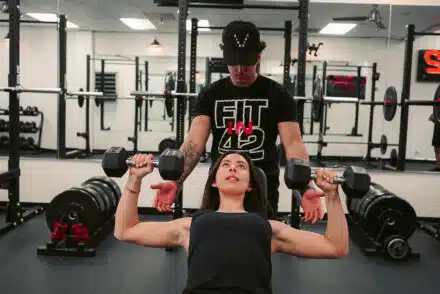
Training while you are on the medication protects that muscle. Better yet, it builds new muscle. And that changes the entire trajectory of your results.
Why Combining Both From the Start Gets Better Results
The instinct for most people is to lose the weight first and then start training. It makes intuitive sense. Get lighter, then get stronger. But it actually works the other way around.
When you start training while you are still on a GLP-1 medication, a few things happen at the same time. Your appetite is already managed by the medication, so fueling your training is easier. You are already losing weight, so you see results faster than someone training without the metabolic assist. And you are building muscle during the loss phase instead of losing it, which means the body composition result at the end is dramatically better.
You end up lighter and stronger, not just lighter. There is a real difference between those two outcomes and anyone who has been through both knows it.
What Personal Training at Fit in 42 Looks Like for GLP-1 Users
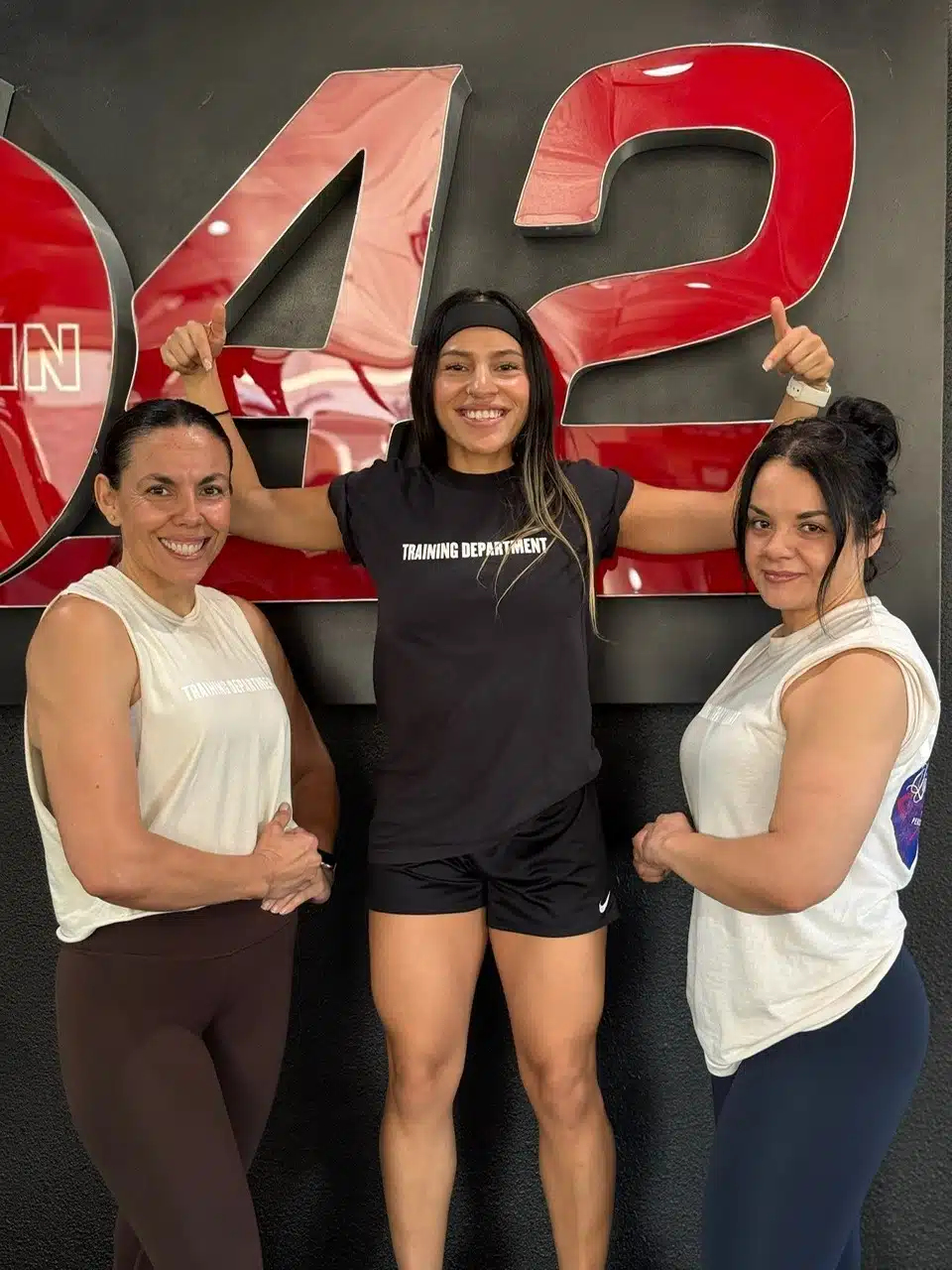
Our La Quinta studio at 79410 CA-111 works with a lot of people who are on GLP-1 medications. We have seen what works and what does not, and the program we build for someone in this situation is different from a standard fat loss program in a few specific ways.
First, the training is resistance-focused. Compound movements that build muscle across the whole body. Squats, presses, rows, deadlifts. The kind of work that sends a clear signal to your body to hold onto muscle even when calories are low. You can read more about the full approach on our GLP-1 personal training program page.
Second, the volume is managed carefully. GLP-1 medications reduce appetite significantly, which means protein intake often drops along with total calories. If you are not eating enough protein and you train too hard without accounting for it, recovery suffers. Our trainers know this and program accordingly. They also work with our 42 Elite Nutrition coaching to make sure your protein targets are actually being hit, because that is what makes the training produce results instead of just wear you out.
Third, the pacing is individual. Some people on GLP-1 medications feel great and have lots of energy. Others deal with fatigue, especially early on. Your trainer adjusts based on how you are actually feeling, not a predetermined script. That kind of real-time adjustment is what separates personal training from any group class or app-based program.
One thing worth knowing: If your trainer does not know you are on a GLP-1 medication, they cannot program properly for you. Being upfront about it from the start means everything gets built around your actual situation. There is more on this at why telling your trainer you are on Ozempic matters.
The Protein Problem Nobody Talks About
This is the piece that trips up the most people on GLP-1 medications who are also trying to train. The medication makes you feel full fast. Eating becomes less of a priority. Which sounds fine until you realize that building and preserving muscle requires a meaningful amount of protein every single day, and when your appetite is suppressed, hitting that target is genuinely hard.
The result is people who are training but not recovering well. Who are doing the work but not seeing the muscle gains they should be seeing. Who are losing weight but still feeling soft and undefined because the protein needed to support the training just is not there.
Getting this right is not complicated but it does require some intentionality. Prioritizing protein at every meal. Treating it as a non-negotiable even when you are not hungry. Working with a coach who can help you figure out what that looks like in real life with real food, not a meal plan that works on paper but falls apart on a Tuesday evening when the medication has you at zero appetite and the last thing you want is another chicken breast.
What Happens When the Medication Stops
For some people, GLP-1 medications are a long-term tool. For others, they are a bridge. Either way, the question of what happens when the medication is done matters.
The people who keep their results are the ones who built something while they were losing. Muscle. Habits. A relationship with training that does not depend on the medication to feel motivated. When the appetite suppression goes away, having a high muscle mass means a faster metabolism that can absorb more calories without storing them. Having a training habit means you keep doing the thing that maintains the physique you built.
The people who regain the weight are almost always the ones who treated the medication as the whole plan and training as optional. They lost the weight. They did not build anything to hold it in place. When the prescription ended, the weight came back because nothing had fundamentally changed about their body composition or their habits.
If you want results that last, the medication and the training have to work together from the beginning. One without the other gives you a partial result. Both together gives you what you actually came for.
Ready to Combine Both at Fit in 42?
Come into our La Quinta studio on Highway 111 and let's build the training program that works with your GLP-1 medication and makes the results stick.
Visit La Quinta StudioGetting Started at Fit in 42 La Quinta
If you are on a GLP-1 medication and thinking about adding training, or if you have already been training on your own and want a program that is actually built around your situation, the first step is a conversation. Come into the La Quinta studio and talk to one of our trainers. Tell them where you are at with the medication, what your goals are, and what you have or have not been doing for training. They will give you a straight answer about what makes sense for you.
If you are not sure where to start, the 21-Day Kickstart is the simplest entry point. Three weeks of coached training that gives you a real sense of what training at Fit in 42 looks like before committing to anything further. Most people who come in for the Kickstart stay. The ones who do not at least leave with a clear picture of what they need to do next.
The medication is doing its job. Now it is time to do yours.